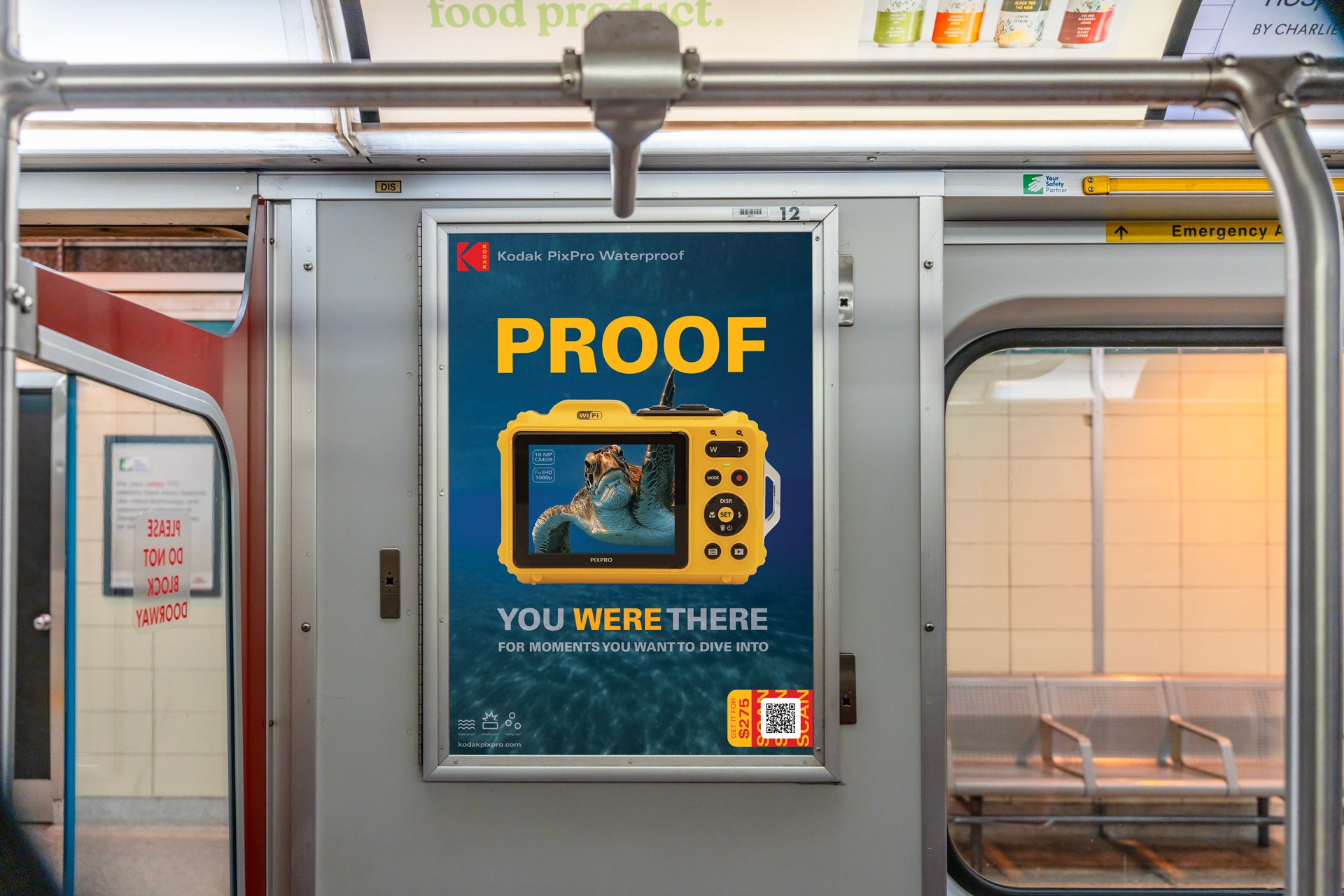
The Kodak PixPro poster in a frame on a Toronto subway car wall: a yellow PROOF headline, the yellow camera with a sea turtle on its screen, and YOU WERE THERE below.

Print

Art direction

Motion

In short

One photo, one line, six formats.

The problem

The assignment: plan a campaign that sells Kodak's PixPro WPZ2, a cheap, tough camera up against GoPro, Insta360 and the phone in your pocket, then design the ads.

What I made

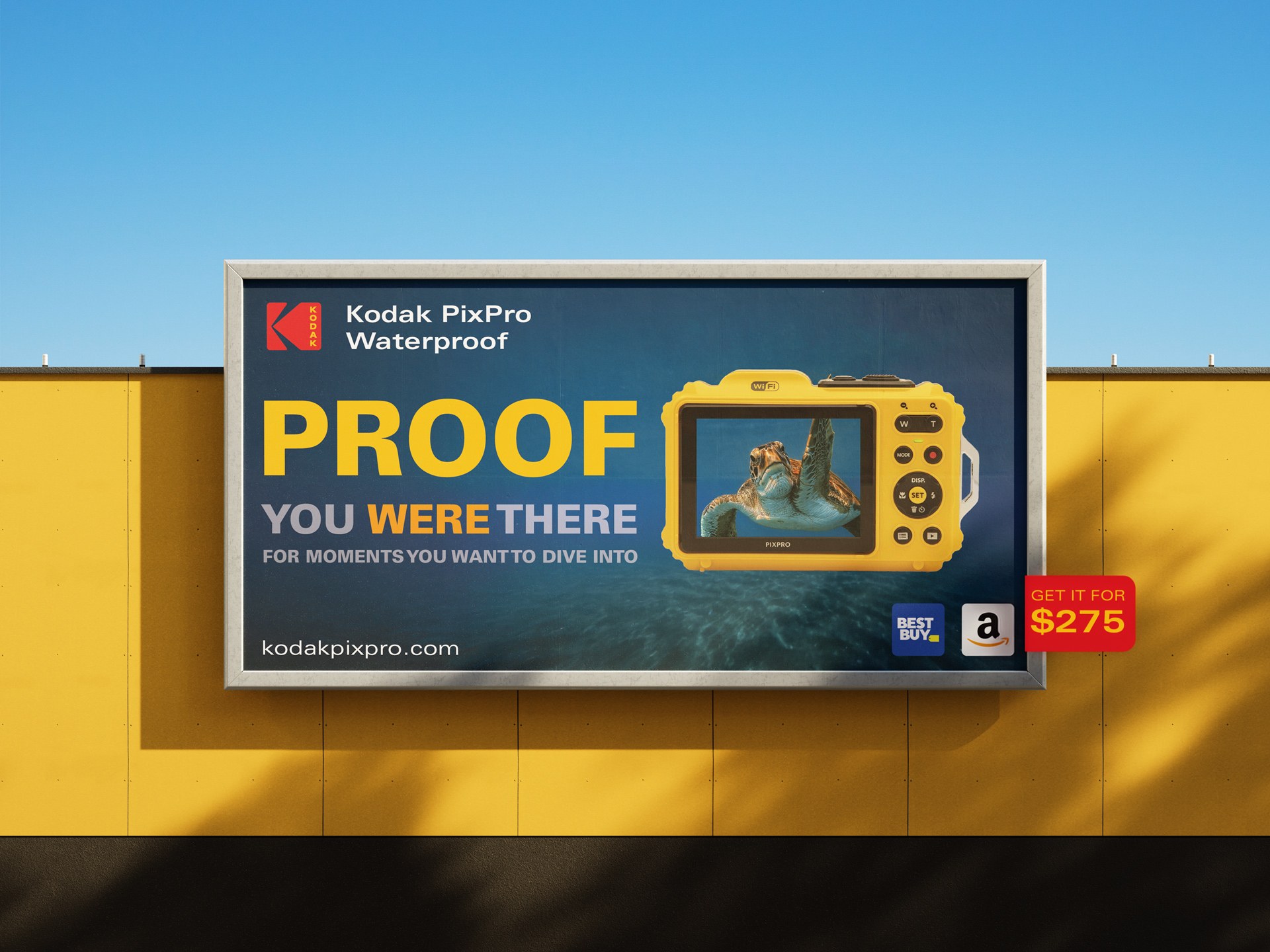
A plan built on one line, “Proof you were there”: the camera goes where you wouldn't take your phone, and the photo is the proof. From it came a transit poster, a billboard, a web banner, an Instagram carousel and story, and a YouTube influencer video, all built around the same turtle shot on the camera's screen.

The result

A class concept on a real brand, not affiliated with Kodak. It got a high grade, mostly for the timeline and for how much the ads improved after feedback from my professor and classmates.

Role

Strategist, art director

Context

College project

Tools

Adobe Photoshop, Adobe Illustrator, Figma, Adobe Firefly

Timeline

Fall 2025
The work

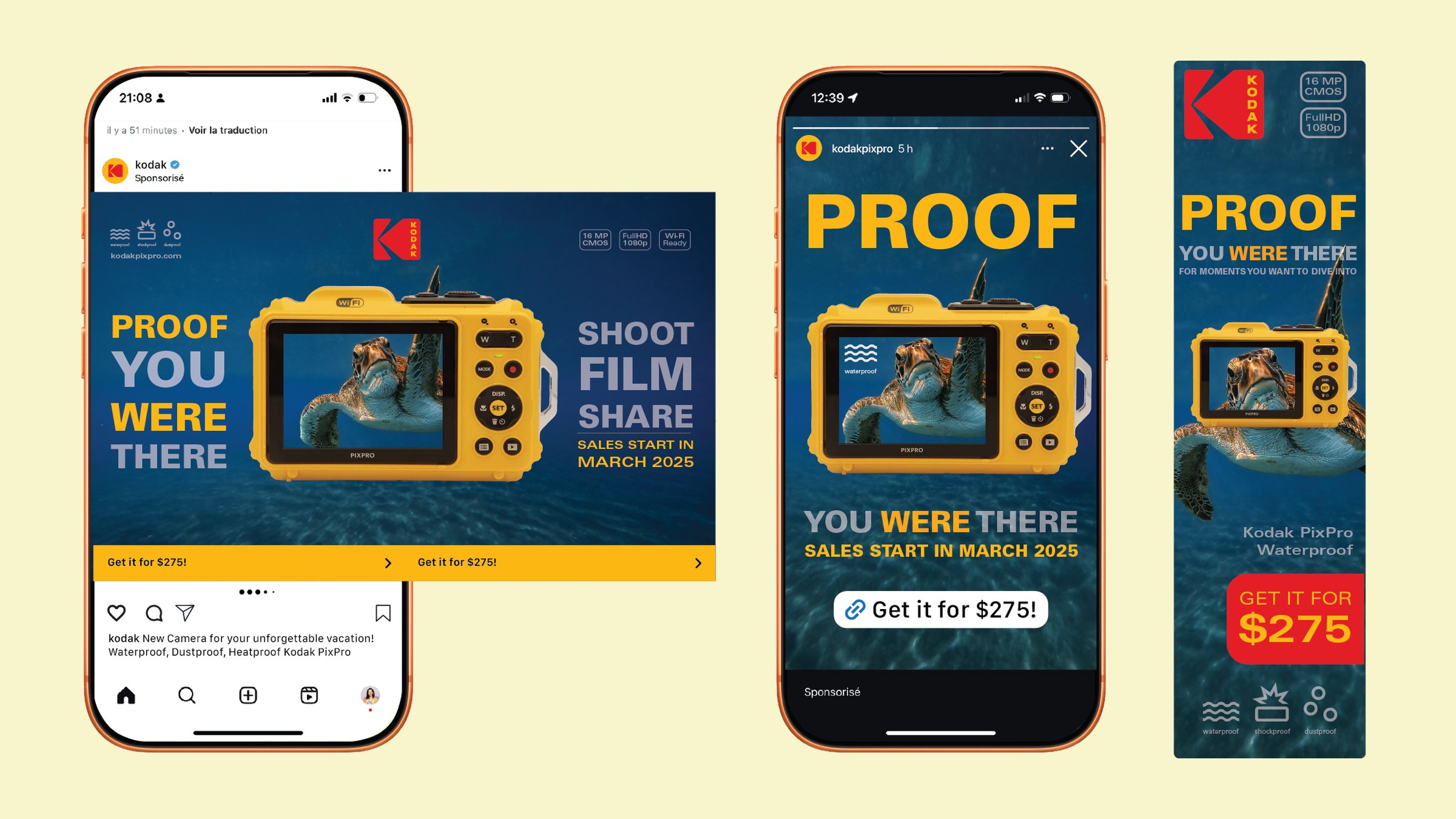
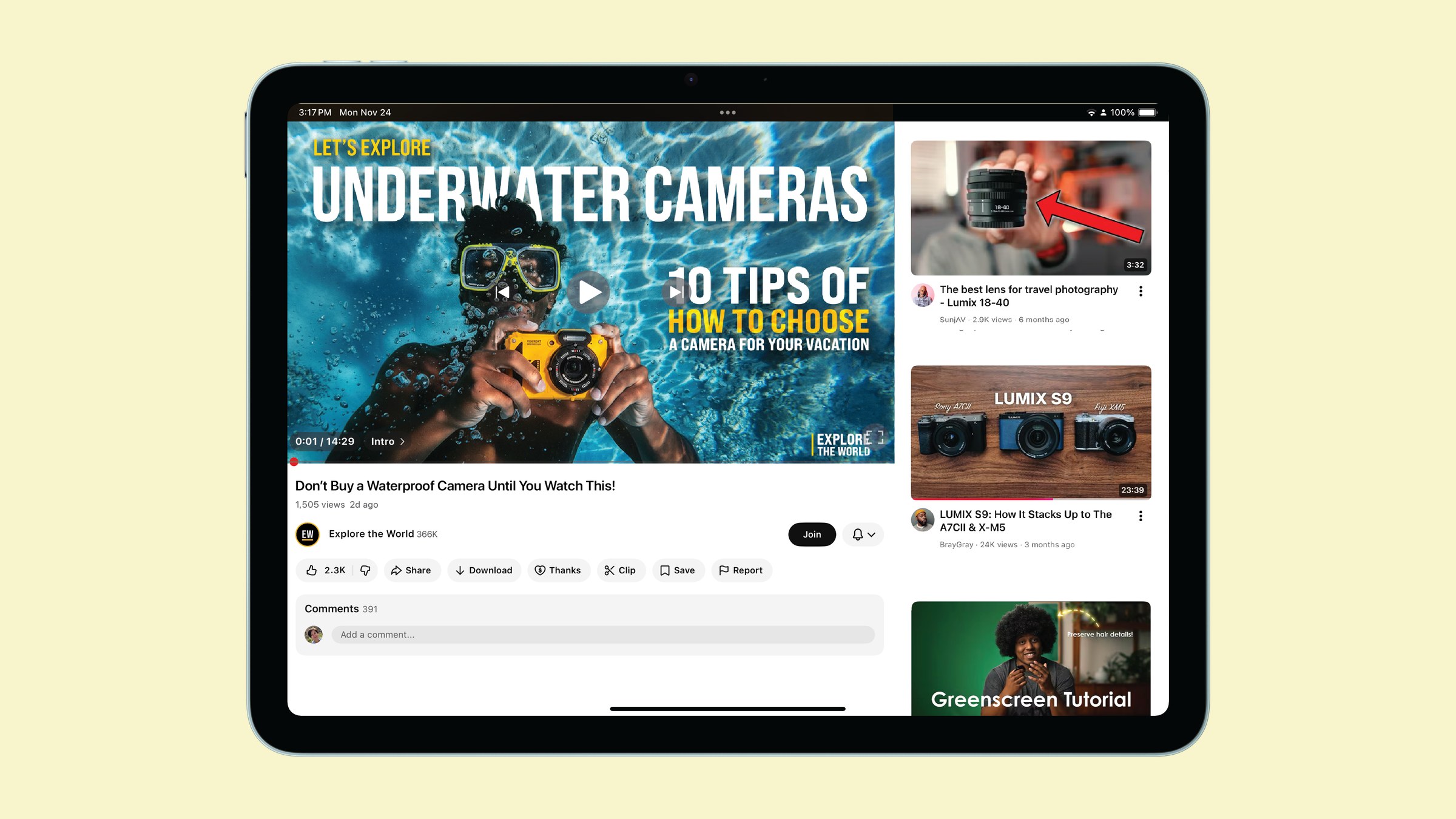
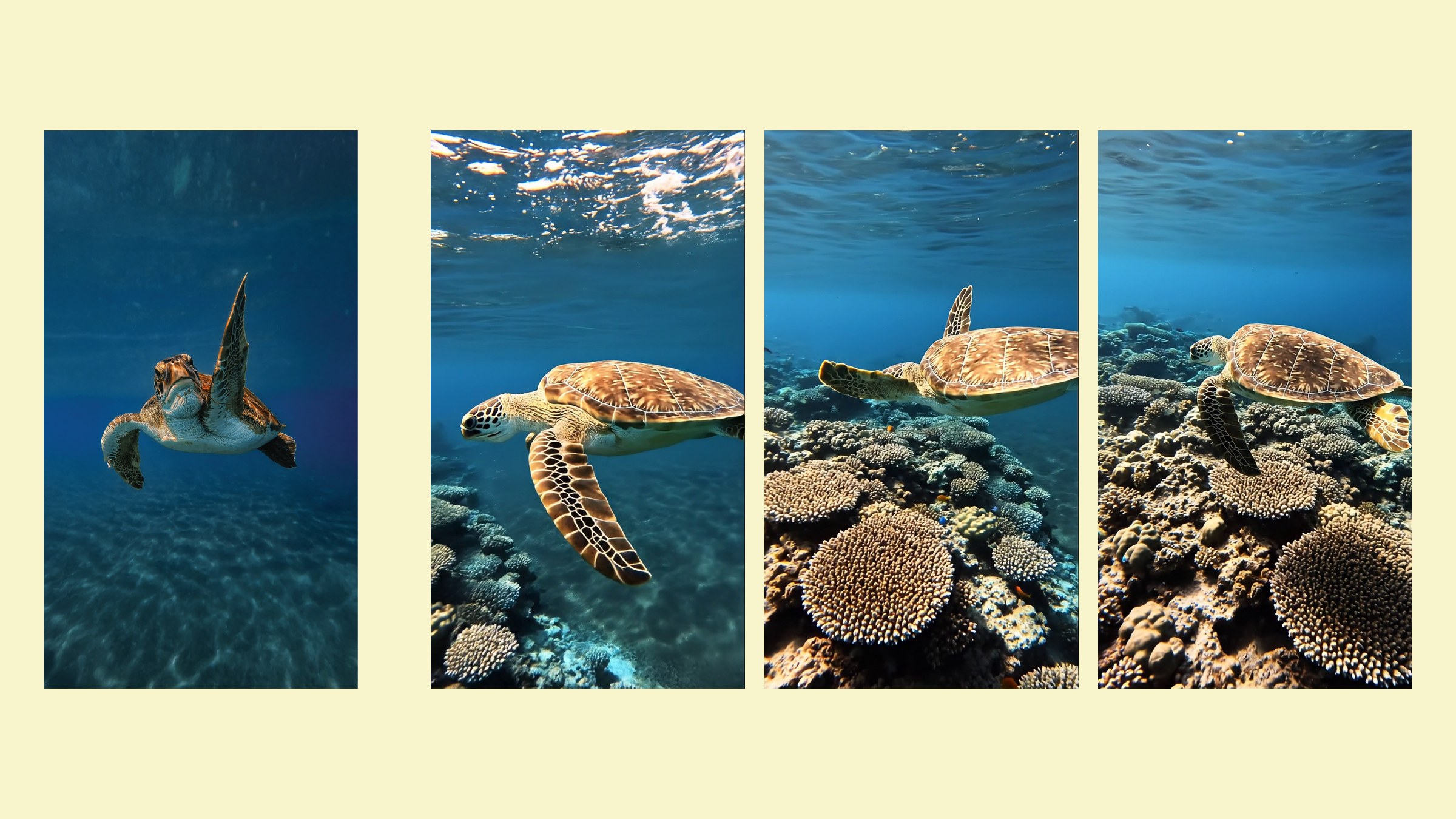
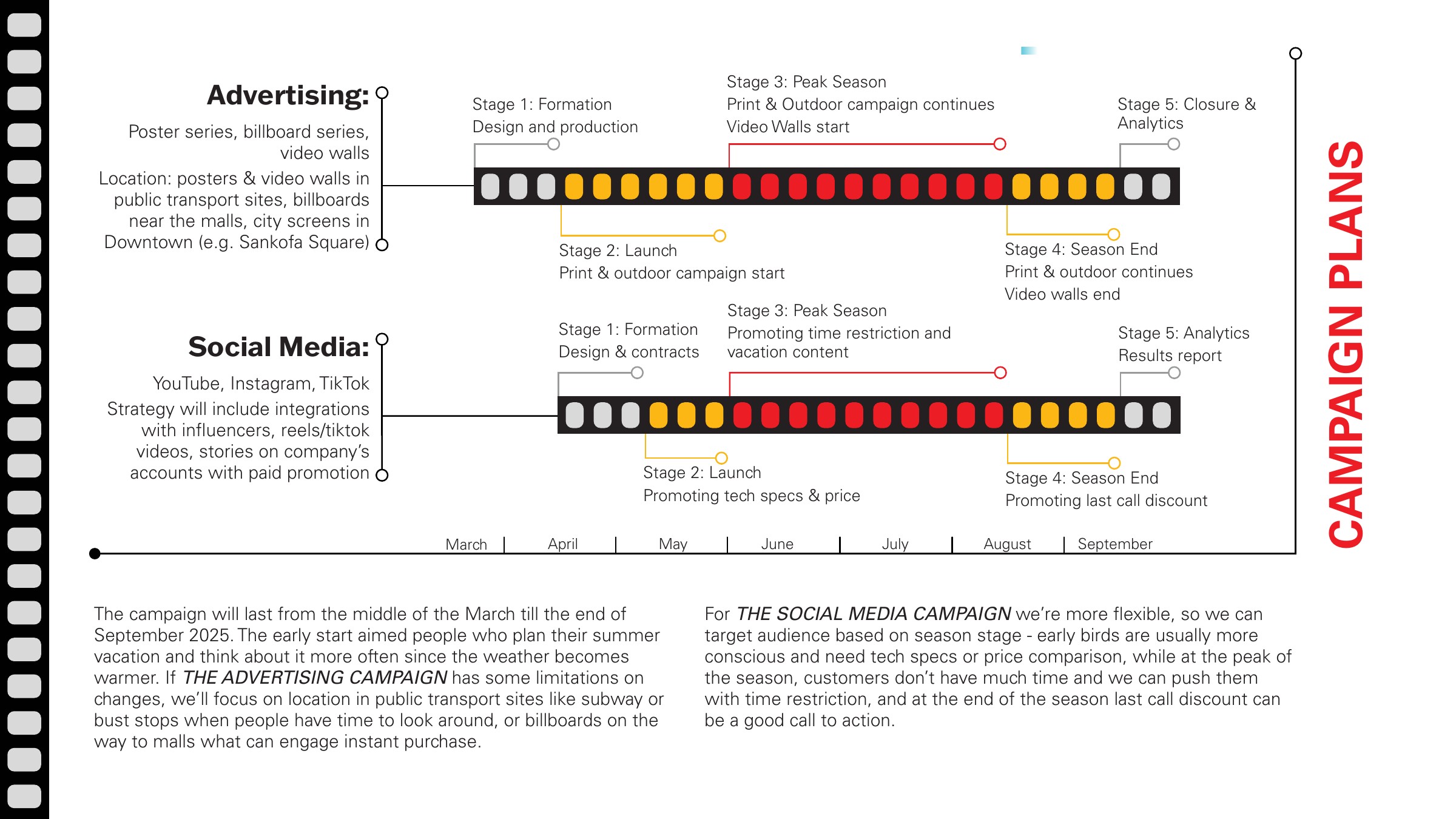
The social ads and web banner, the YouTube influencer video, the turtle clip next to its source photo, and the campaign timeline.

Research

Who it's for

Active travellers and content creators first: people who want a small, tough camera for real trips. Then photographers who want water and action shots without risking their main camera, and families who want a camera kids can use on vacation.

When it runs

Mid-March to the end of September 2025, starting when people begin planning summer trips. Print and outdoor keep one message for the whole run. Social changes with the season: specs and price for early planners, urgency at peak season, a last-call discount at the end.

Where each ad goes

  • Transit poster: subway cars and stations, where people stand and have time to read. QR code to the store.
  • Billboard: on the way to malls, for a same-day purchase. Price and retailers up front.
  • Web banner: the action-camera sections of electronics store websites.
  • Instagram carousel: paid post for the launch, with specs and price.
  • Instagram story: paid, the turtle moving behind the camera and on its screen.
  • YouTube: an influencer video for people still comparing cameras. The recommendation is the call to action.

Reflection

How I used AI

The whole campaign runs on one stock photo of a turtle, so it had to stretch. I used Photoshop's Generative Expand to fit it to every format, from the tall web banner to the wide billboard.

For the story, I turned the still into an 8-second clip in Firefly. Only the first frame is my edit of the photo; after that the model makes up the scene, so I treat it as generated footage. The camera, type and layout are designed by hand.

What I'd change

  • The billboard still carries too much for a roadside read: logo, product name, three lines of copy, two retailers and a price.
  • Nothing was tested with real people. Next time I'd check the posters at viewing distance before calling them done.

See you underwater!