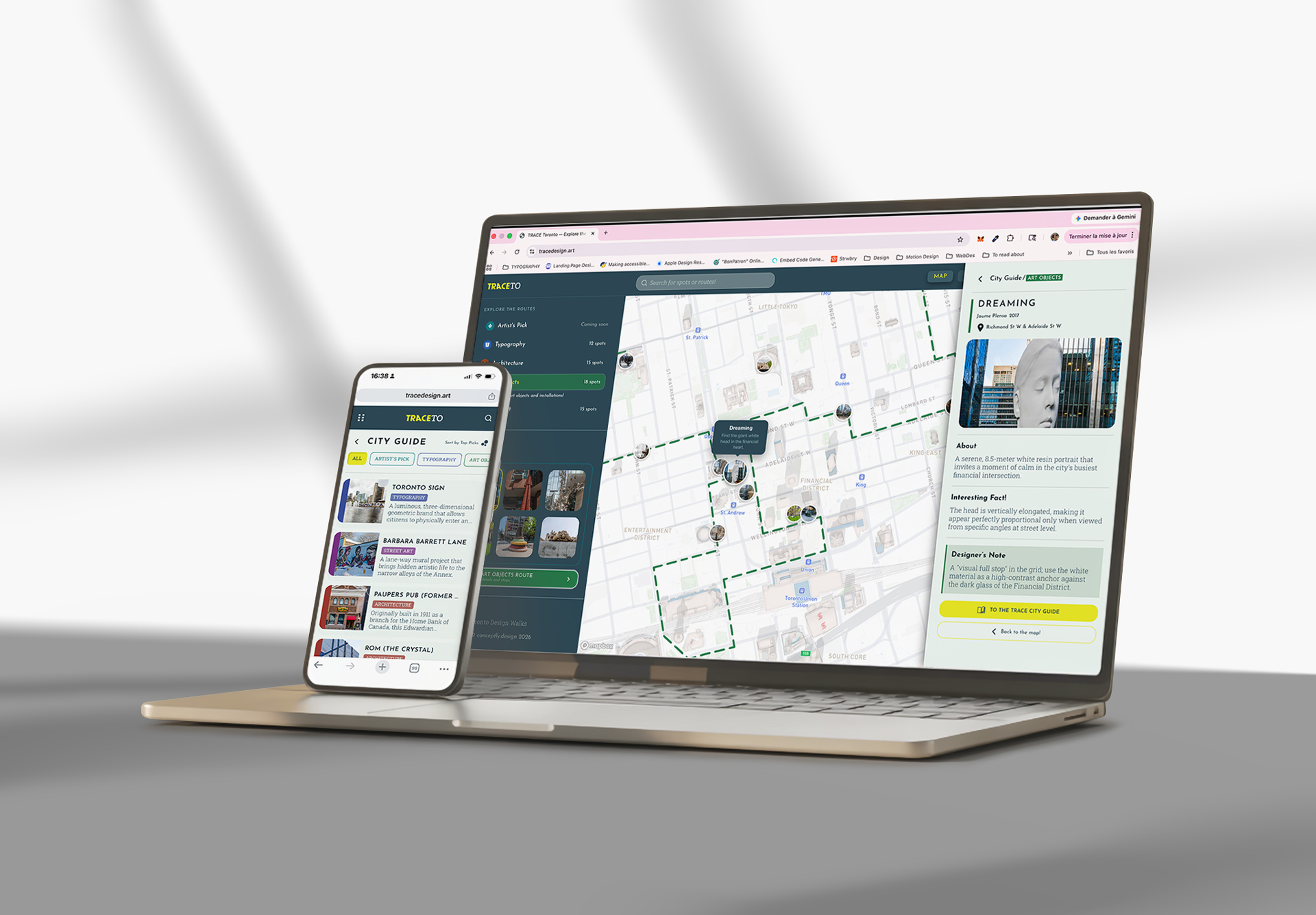
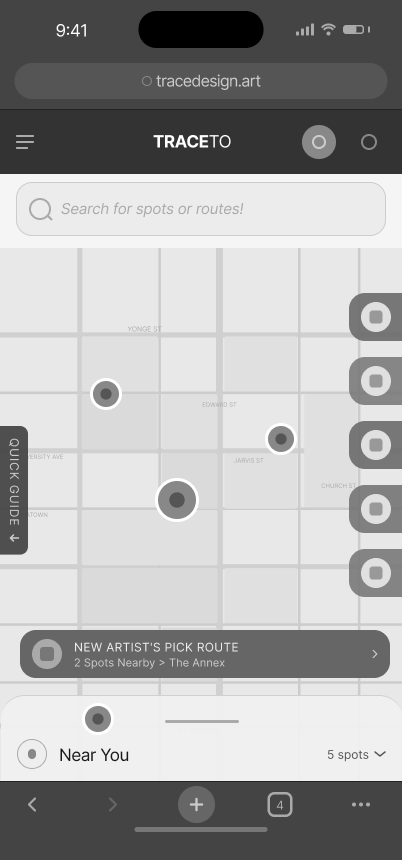
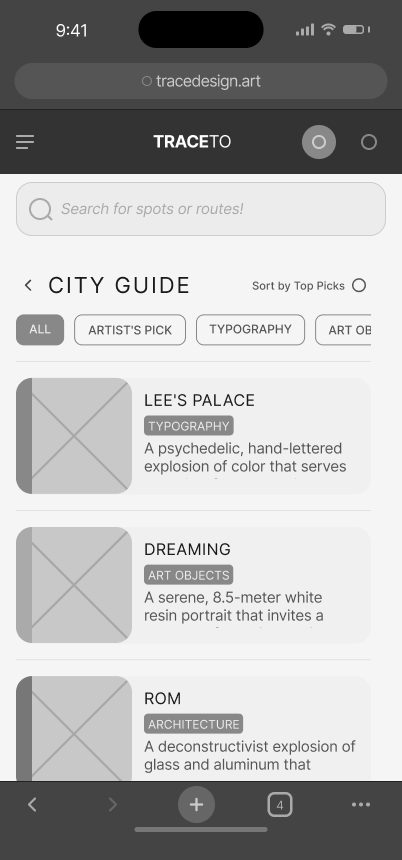
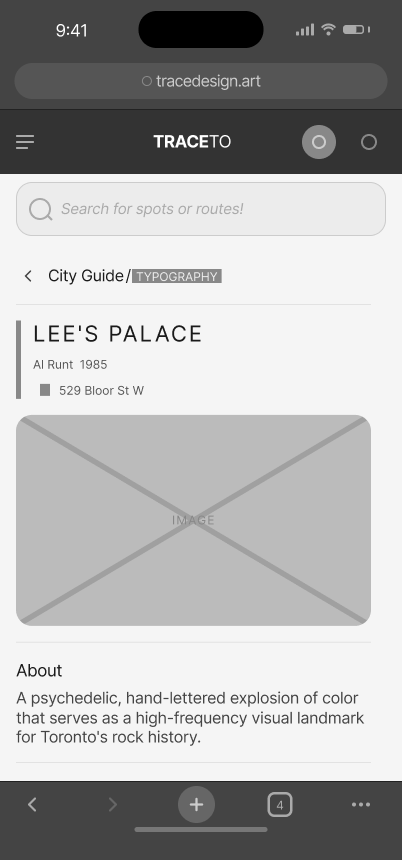
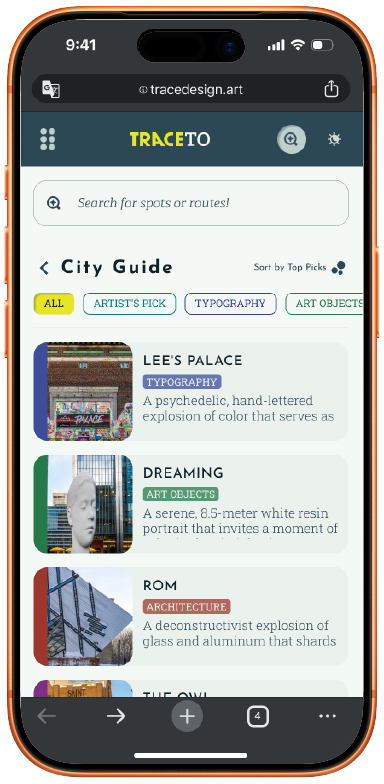
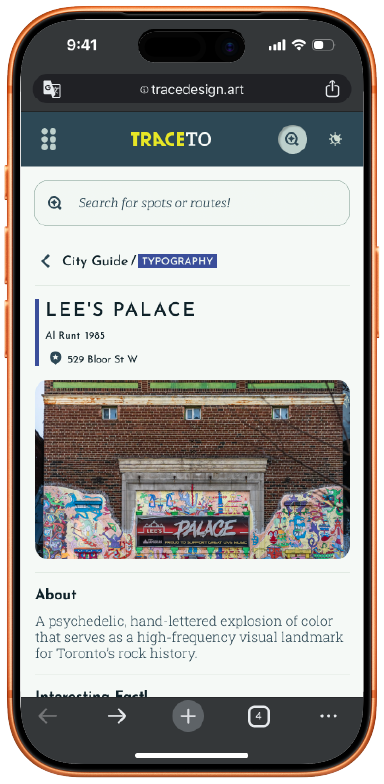
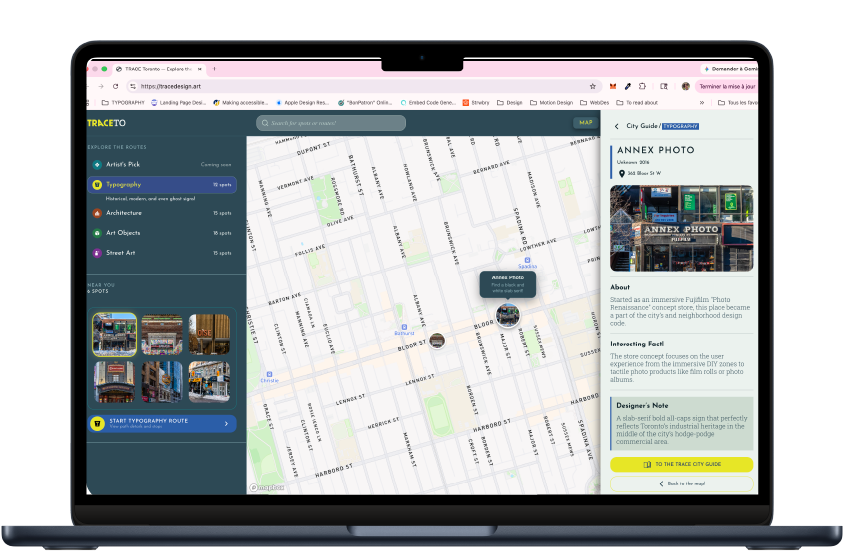
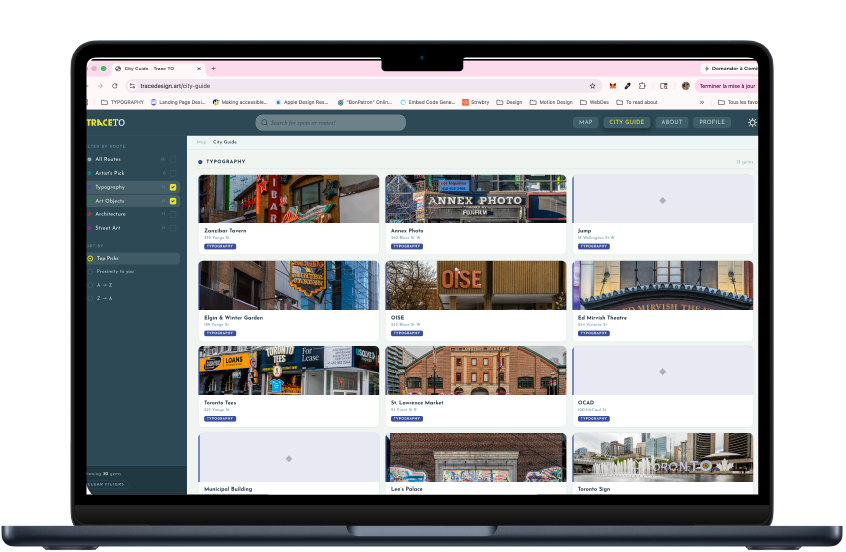
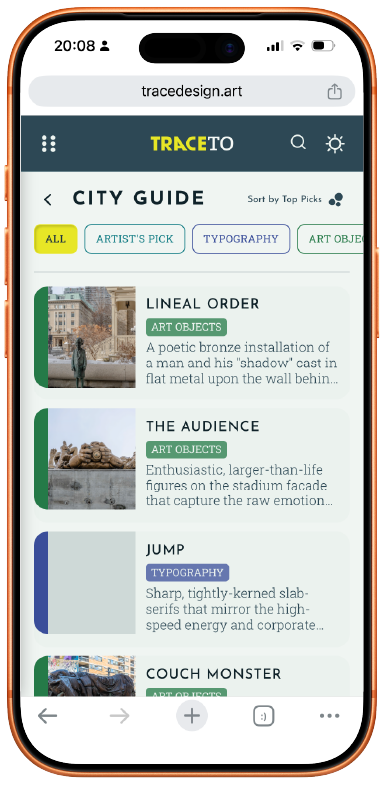
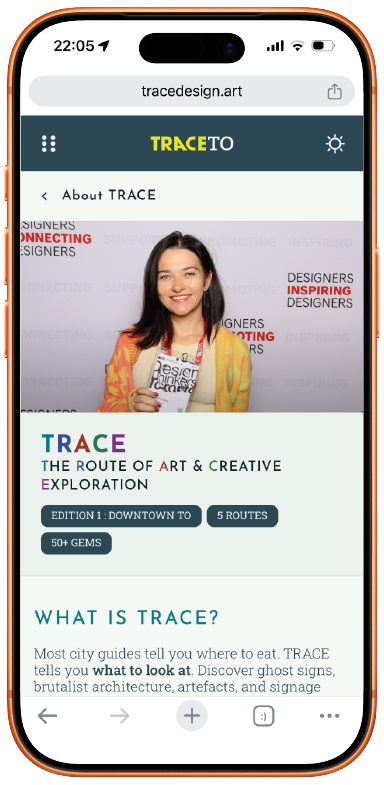
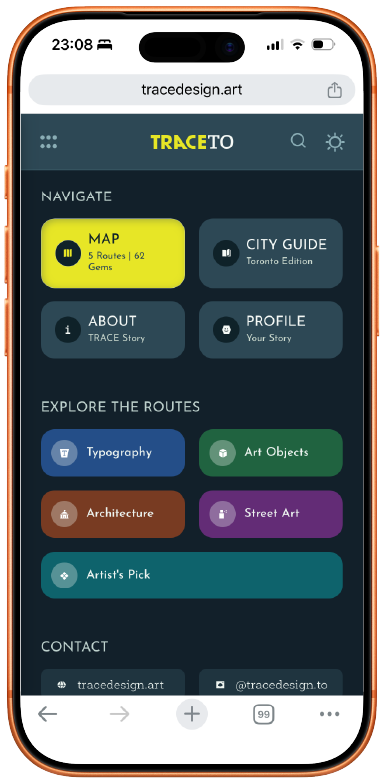
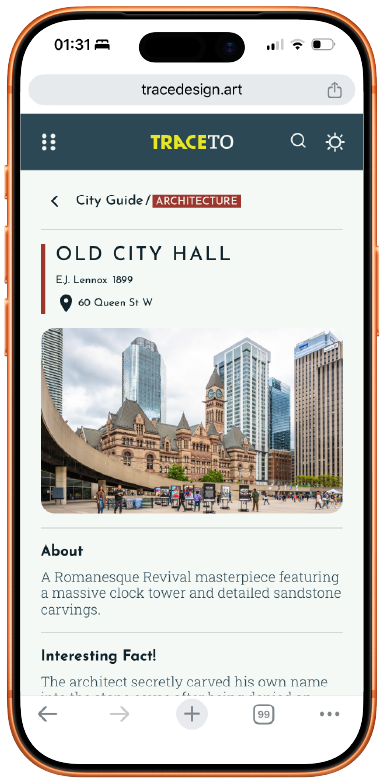
“TRACE” is a non-commercial, multi-platform design ecosystem that offers a unique interactive experience to explore Toronto's creative side.
Design, Photography, AI Front-End Dev


Mapbox for custom map design turned out to be the most flexible and affordable tool. The gathered data were organized in GeoJSON tables with descriptions, image links, interesting facts, and coordinates. All this allowed me to design every piece of the TRACE map — from the spots icons to the routes and map interactions.

Designers, photographers, visual thinkers. Already know the city, but want structure, challenges, and rewards, fresh inspiration outside of their studios
Domestic and International Look for more than the top 10 attractions, interested in culture, visuals, and authentic, visually rich urban experiences
Design, art, architecture, urban studies. Need a playful way to teach visual literacy, design observation, and urban analysis outside the classroom
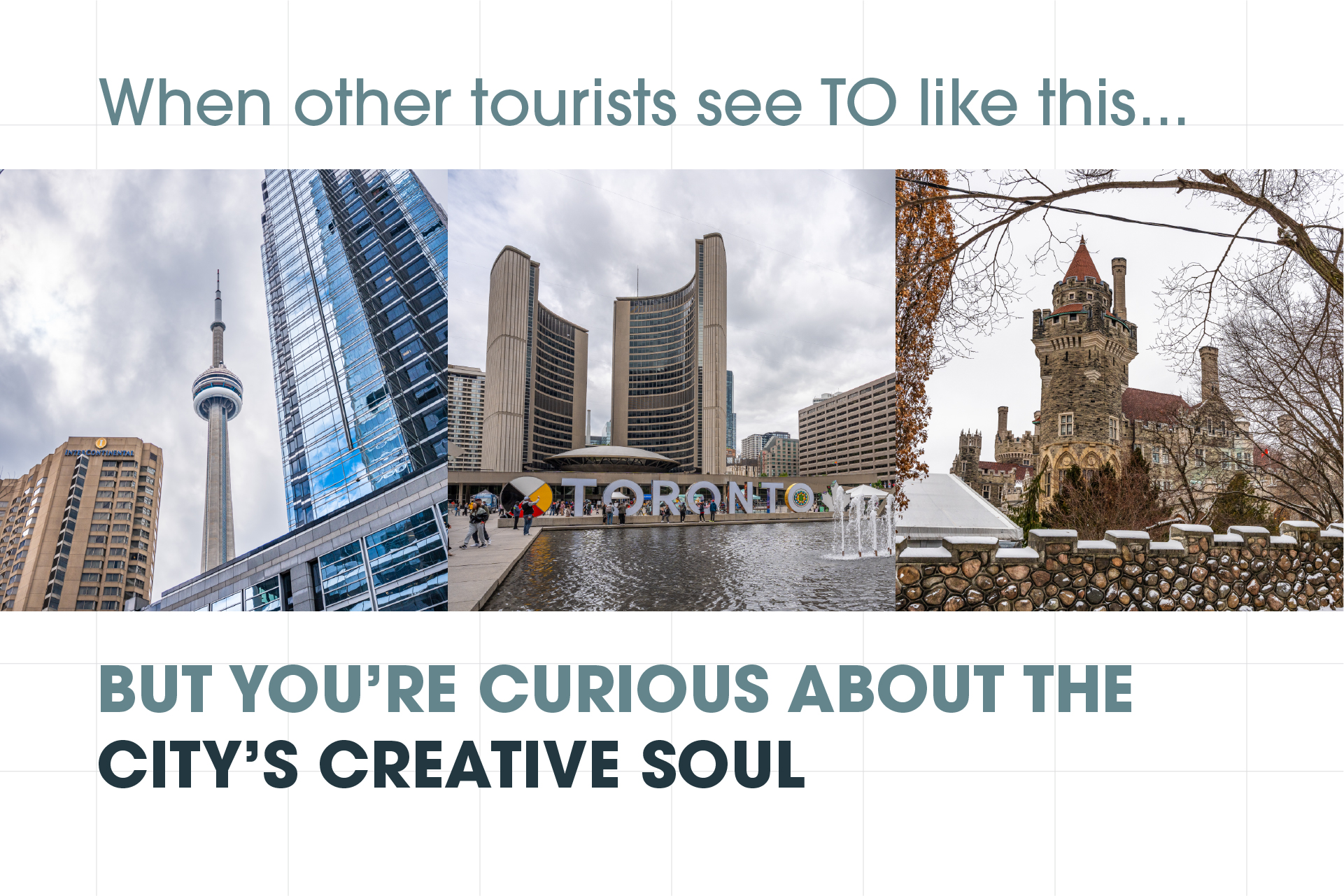
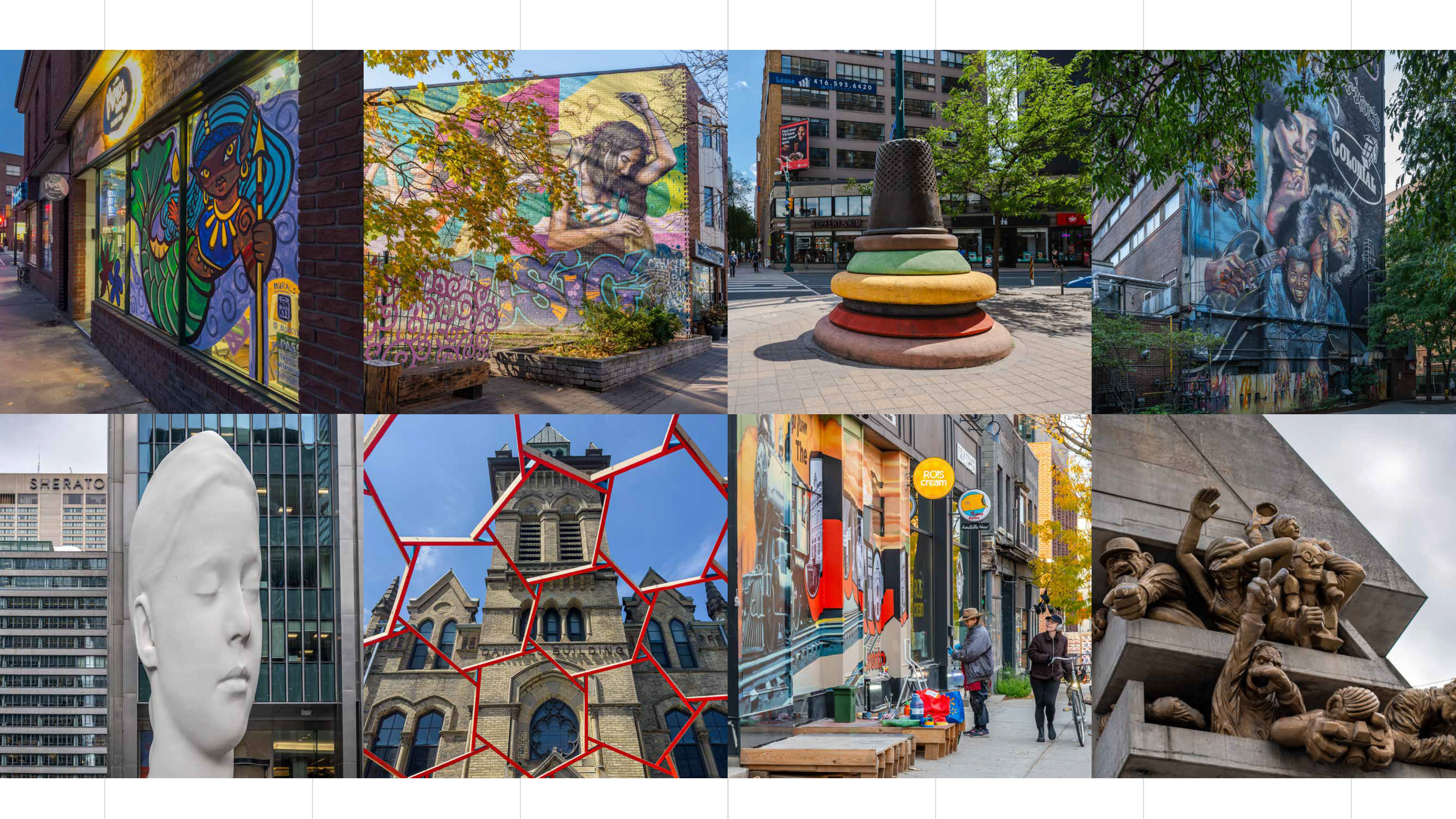
Standard tourist maps & guides focus on consumption (food, shopping) and Top-10 attractions (CN Tower, Ripley’s). For designers, photographers, architects, curious tourists, and even locals, that’s not enough. But there is no useful resource that would gather, categorize, and map the city’s hidden gems.
We create a responsive, data-driven interactive map that functions as both a professional design archive and a gamified exploration tool?


TRACE is a vibe coding project. That means that AI will need to follow all my creative decisions! That is where it usually fails — AI-generated websites look nice from the first glance, but have bad UX and many design violatons in real use.
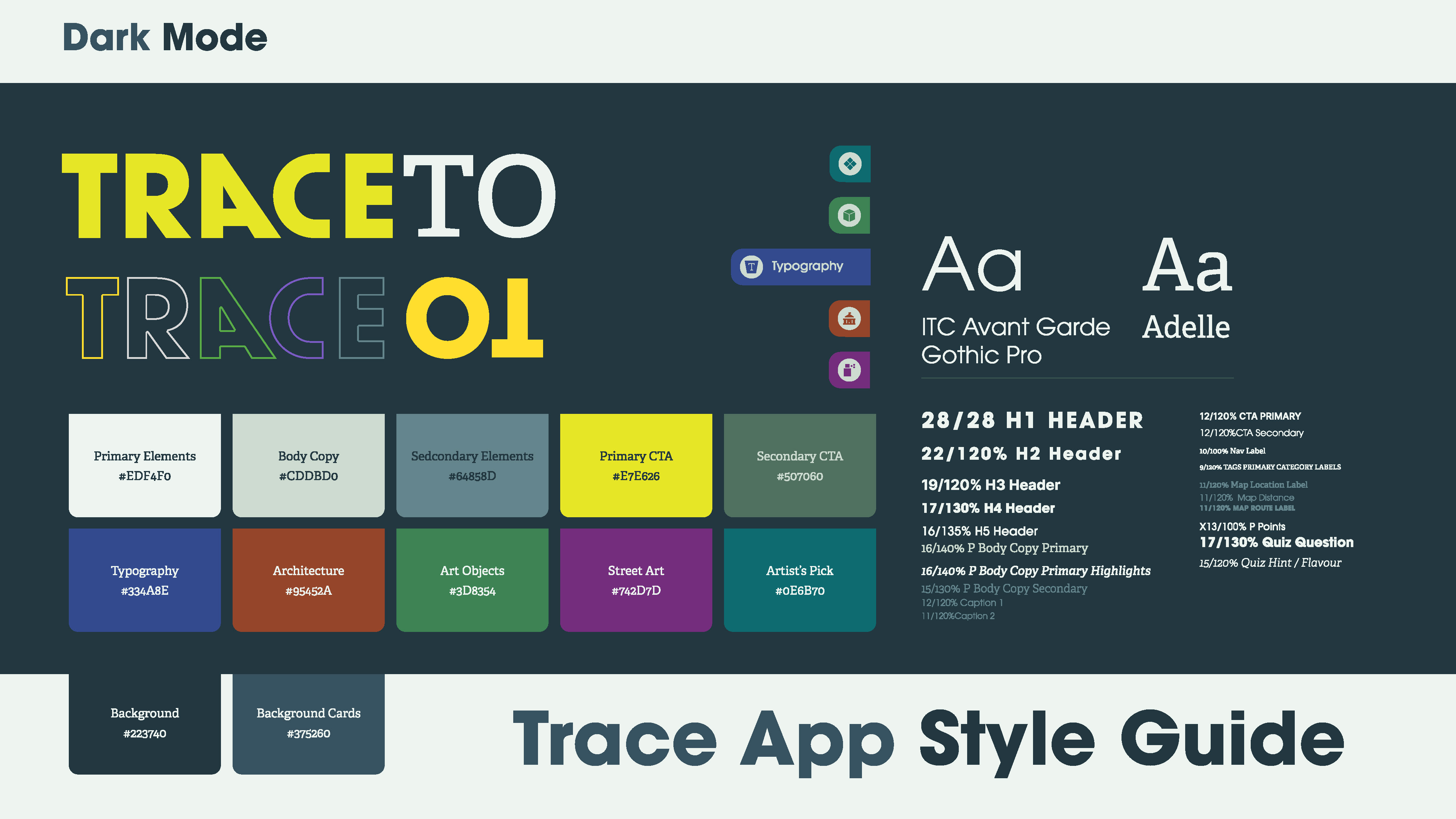
All creative decisions should be documented in the AI-language—Markdown files. The human design is still first and foremost, AI is just an execution tool.
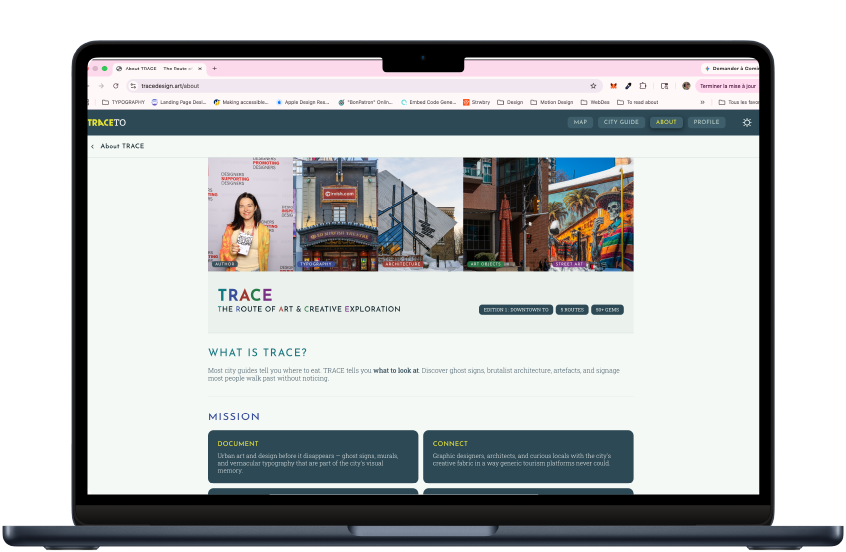
About Page and Welcome Message
Route Buttons
TRACE is more than a map; it is a design system for the city.